Sales Forecasting Methods and Techniques for Shopify
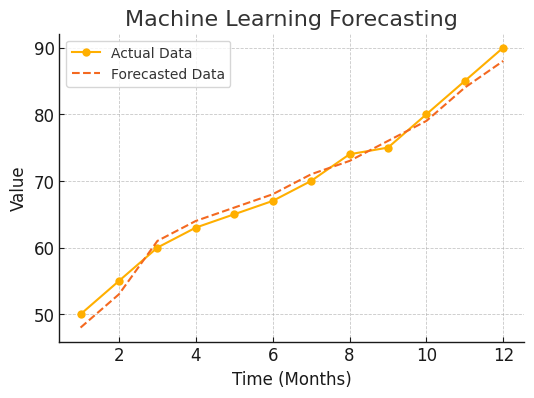
There is no single right way to forecast sales. There are several methods, each with a sweet spot, and picking the wrong one is how stores end up either drowning in stock or selling out mid-campaign. This is the methods companion to sales forecasting for Shopify: what each technique does, when it fits, and how much accuracy to expect.
Qualitative vs quantitative forecasting
Two broad families. Qualitative methods rely on judgement, expert opinion, market research, a founder's read on demand. They matter when you have no history, like a brand-new product. Quantitative methods use your actual data and take over the moment you have a few months of orders. Everything below is quantitative, because once you are on Shopify you have the data to do better than a guess.
The four methods that matter
Moving average
Average the last N periods and roll it forward. Simple, transparent, and a fine baseline for a stable store. Its weakness is that it lags. It cannot see a trend turning or a seasonal spike coming, it only smooths what already happened. Use it as a sanity check, not your only forecast.
Exponential smoothing
Like a moving average, but recent periods get more weight than older ones. It reacts faster to change while still filtering noise. Variants such as Holt-Winters add explicit trend and seasonality terms, which makes this a genuinely useful method for stores with a clear annual rhythm.
Regression analysis
Model sales as a function of drivers: ad spend, season, price, promotions. Regression is the first method that answers "what happens to sales if we change X," not just "what comes next." It needs cleaner data and more setup, but it turns forecasting into a planning tool.
Machine learning
The model learns the patterns itself across trend, multi-level seasonality, holidays, and promotions, and handles missing data and outliers without hand-tuning. It is the most accurate option at scale and the one By the Numbers runs under the hood. The trade-off is that it needs enough history to learn from, usually a couple of seasons.
Which method to use when
- New store or new product, little history: qualitative plus a simple moving average.
- Stable store, clear yearly season: exponential smoothing with Holt-Winters.
- You want to plan spend and price, not just predict: regression.
- Enough history and you want hands-off accuracy: machine learning.
Most growing stores end up running machine learning for the headline forecast and keeping a moving average as a gut check.
How accurate should a forecast be?
No forecast is exact, and chasing perfect accuracy wastes time you could spend on the product. Track forecast error (how far each prediction lands from actual sales) and aim to reduce it over time rather than hit a fixed percentage. A forecast that is consistently within a usable range and improving beats a precise one you cannot reproduce next month.
The methods matter most where the money is: inventory planning and reading how seasonality moves your sales. Pick the method that fits your stage, then let it drive the restock and campaign calendar instead of guesswork. By the Numbers applies the machine learning version automatically and ties it to your product reporting so the forecast and the stock decision live in one place.
Keep reading
If you want the full picture on sales forecasting, start with sales forecasting for Shopify.
Related reading: Best SKU Practices for Shopify Inventory Management, How to Group SKUs for Shopify Inventory Management and Shopify Sales Velocity: What It Is and Why It Matters.
By the Numbers builds this into the dashboard. See sales forecasting.
See what is working in your Shopify store
By the Numbers turns your store data into reports, segments, and forecasts.
- AI-powered analytics
- Customer segmentation
- Predictive forecasting
- One-click Shopify install